Straight vs. Coudé Tip Catheters: Understanding the Difference
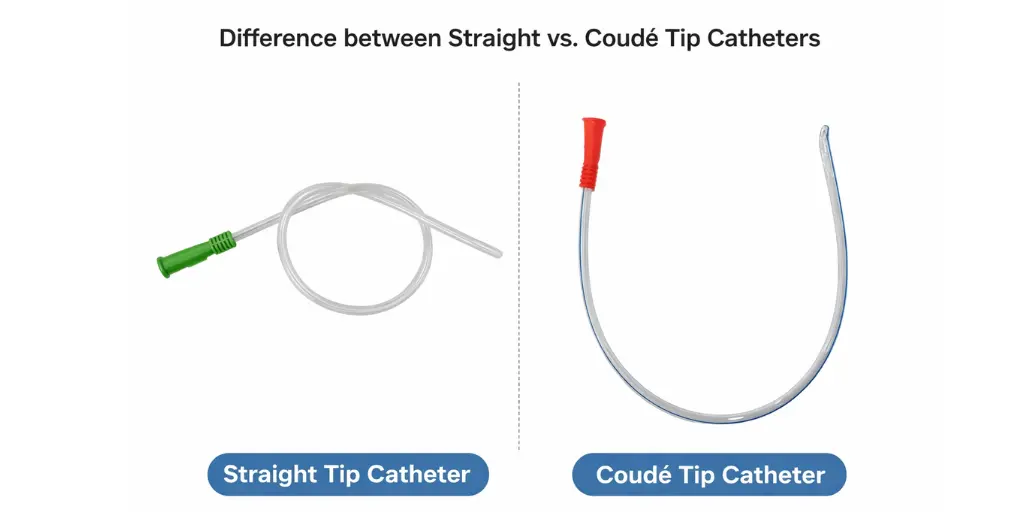
Choosing the correct equipment for urological health is vital for comfort and safety. While most users start with a standard design, anatomical variations often require a more specialized tip. Understanding the difference between straight vs. coudé tip catheters is the first step toward a more comfortable daily routine.
Key Takeaways
- Anatomical Design: While a straight catheter is perfectly linear, a Coudé tip catheter features a specific “elbow” curve designed to navigate past obstructions like an enlarged prostate or urethral strictures.
- The Guide Stripe: To ensure safety during insertion, Coudé users must keep the colored guide stripe facing upward (toward the belly button) so the curved tip navigates the anatomy correctly.
- Target Users: Straight catheters are the standard for women and many men, while Coudé tips are the preferred medical solution for men experiencing resistance or pain during catheterization.
- Quality Brands: Using premium supplies from manufacturers like Coloplast and Bard can reduce the risk of micro-abrasions and UTIs compared to lower-quality, stiffer alternatives.
- Guidelines for Coverage: Both types are typically covered by Medicare, but switching to a Coudé tip usually requires your doctor to document why a standard straight catheter is insufficient for your needs.
Quick Comparison: Straight vs. Coudé Catheters
If you are unsure which catheter applies to your specific needs, this table breaks down the key differences:
| Feature | Straight Tip Catheter | Coudé Tip Catheter |
|---|---|---|
| Tip Shape | Perfectly straight and flexible. | Slightly curved or “elbowed” at the tip. |
| Best For | Routine self-catheterization; women; men with no obstructions. | Men with an enlarged prostate (BPH), urethral strictures, or scar tissue. |
| Insertion | Standard insertion technique. | Requires specific orientation (Guide Stripe facing up). |
| Insurance | Standard coverage (Medicare/Private). | Covered, but often requires Medical Necessity documentation. |
What is a Straight Catheter?
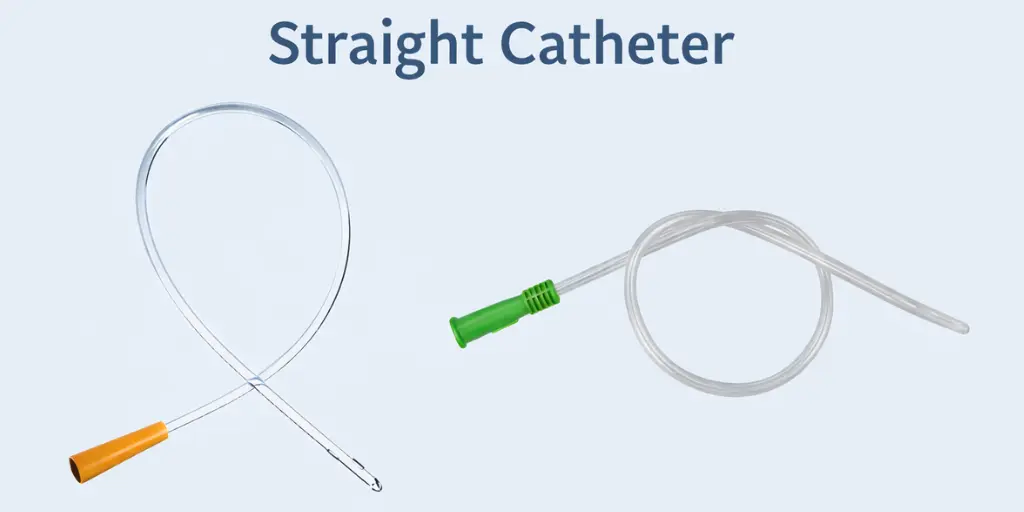
A straight catheter is the most common type used for intermittent self-catheterization. As the name implies, the tube is perfectly linear from the funnel to the insertion tip. It is generally the first-line choice for patients who do not have any physical blockages in their urinary tract.
- Who uses it? It is the standard straight catheter for women and many men with uncomplicated anatomy.
What is a Coudé Catheter?
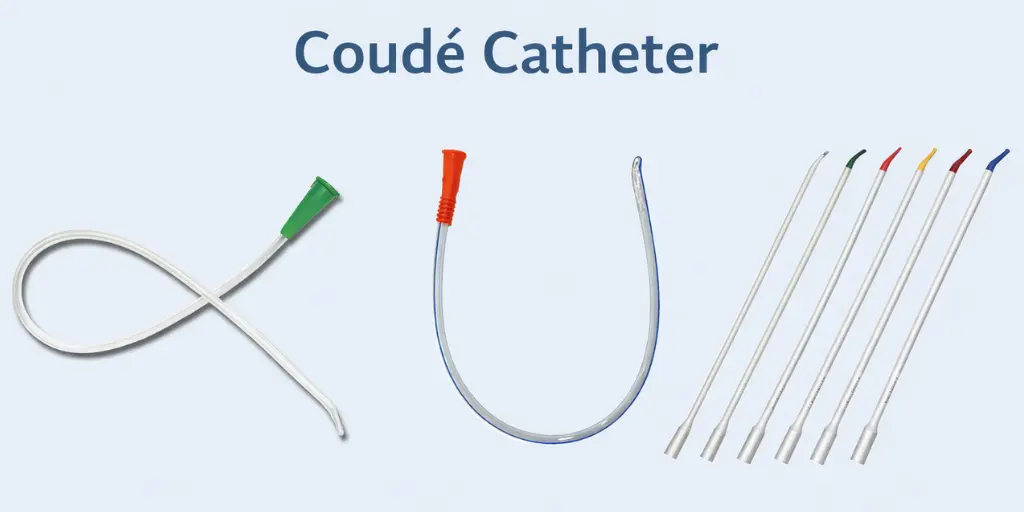
The word “Coudé” is French for “elbow.” These catheters feature a slight curve, taper, or bend at the insertion tip.
- Who uses it? This is the preferred catheter for men who have difficulty passing a straight tube. The curved tip acts like a rudder, allowing the catheter to “swim” over blockages—such as a swollen prostate or scar tissue—rather than poking directly into them
Key Usage Tip: The Guide Stripe
Most Coudé catheter have a colored line or notch on the funnel end. This is a safety guide. You should always keep this line facing upwards (towards your belly button) during insertion to ensure the curved tip is pointed in the correct direction to navigate the prostate safely.
We Carry Trusted Brands: Coloplast, Bard, and More
Your comfort depends on the quality of your supplies. Cheap, stiff plastic can cause micro-abrasions and increase the risk of UTIs. That is why we partner with leading manufacturers to provide high-quality options, including:
- Coloplast: Known for their hydrophilic “SpeediCath” technology that requires no extra lubricant.
- Bard: Famous for their red rubber and latex-free options that offer a different stiffness for better control.
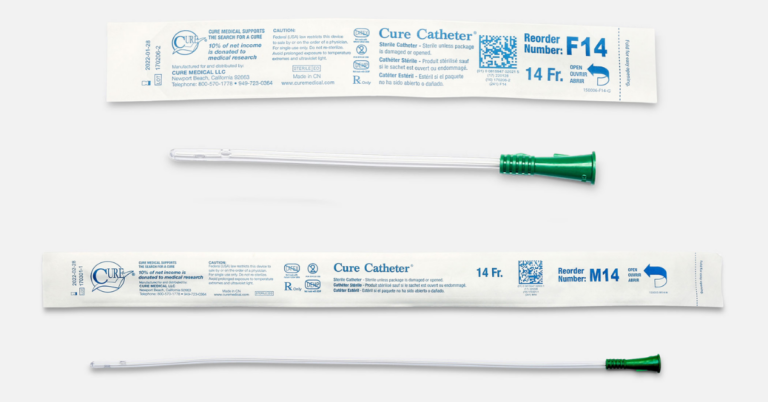
- Cure & Hollister: Offering discreet, pocket-sized options for active users.
Insurance Coverage & Medicare Guidelines
Medicare and most private plans cover both types of catheters. However, because Coudé tips are more expensive, they typically require specific medical documentation. Your doctor must usually certify that you have attempted to use a straight tip and found it difficult or impossible to pass.
Find the Right Fit for You
Are you experiencing resistance or discomfort with your current supplies? Whether you need to switch to a Coudé tip or simply want to try a smoother brand like Coloplast or Bard, our urology specialists can help.
Are you experiencing resistance or discomfort with your current urinary catheter supplies? Whether you need to switch to a Coudé tip or simply want to try a smoother brand like Coloplast or Bard, our urology specialists can help.
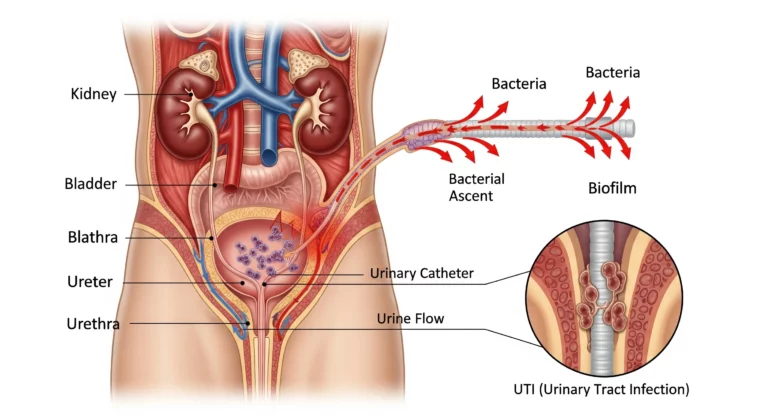
It is also important to maintain proper hygiene to avoid complications; you can read more about catheter UTI prevention to stay healthy while using your supplies. Reach out today for a free consultation to see if you qualify for upgraded, insurance-covered supplies.
FAQs: Straight vs. Coudé Tip Catheters
Q1: Is a Coudé catheter more painful than a straight one?
A: Actually, for many men, it is the opposite. If you have an obstruction like an enlarged prostate, forcing a straight catheter can cause pain and bleeding. A Coudé tip is designed to glide over those obstacles, often making the process much more comfortable.
Q2: How do I know if the Coudé tip is facing the right way?
A: Look for the “Guide Stripe” or a notch on the wide end (the funnel) of the catheter. During insertion, this stripe should always point toward your head/belly button. This ensures the curve of the tip is pointed upward to follow the natural curve of the male anatomy.
Q3: Do women ever use Coudé catheters?
A: It is very rare. Because the female urethra is much shorter and typically has no obstructions like a prostate, a straight catheter is almost always sufficient. A doctor might only prescribe a Coudé tip for a woman if there is significant scar tissue or a rare urethral bend.
Q4: What should I do if I feel resistance while inserting a catheter?
A: If you feel resistance, do not force the tube. Take a deep, slow breath to help your pelvic muscles relax. If you are using a Coudé catheter, ensure the Guide Stripe is still facing up toward your belly button. Sometimes, “bearing down” gently as if you are trying to urinate can help the catheter tip slide past the prostate or bladder sphincter more easily.