The Benefits of Power Tilt and Recline for Pressure Relief
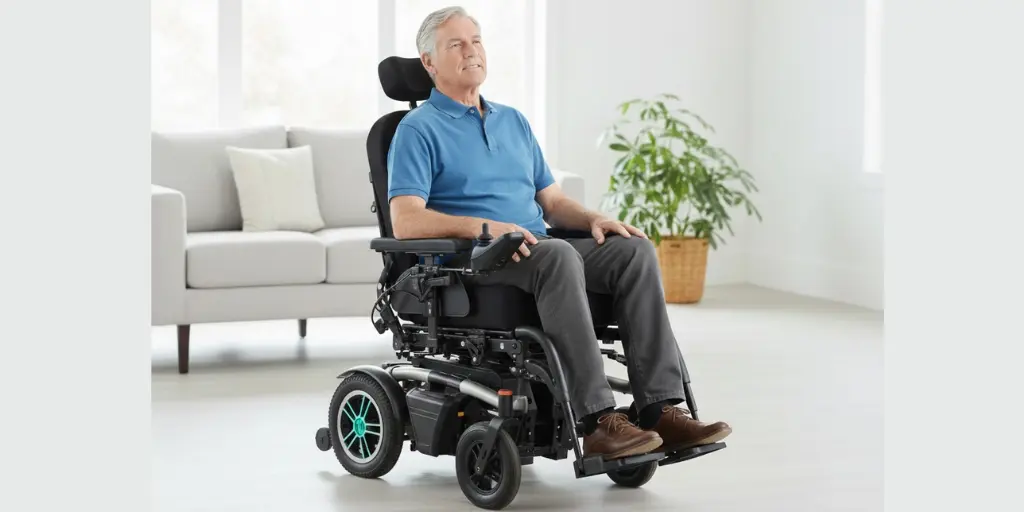
For full-time wheelchair users, the risk of developing pressure injuries—often referred to as bedsores or decubitus ulcers—is a primary health concern. When you are unable to perform a “functional weight shift” independently (lifting your body weight off the seat), gravity creates constant pressure on the skin covering the pelvic bones.
Power Tilt and Recline systems are complex rehab technologies engineered to address this by allowing you to redistribute that weight at the touch of a button.
Key Takeaways
- Weight Redistribution: Power tilt shifts your weight from the “sit bones” to your back without changing your posture, providing essential pressure relief.
- Tilt vs. Recline: Tilt maintains your seating angle to prevent sliding, while recline opens the hip angle—ideal for stretching, resting, or medical procedures like catheter changes.
- Circulation & Swelling: Combining tilt with elevating leg rests is the most effective way to manage edema (swelling) by positioning your feet above your heart.
- Skin Protection: Regular use of these systems restores oxygen-rich blood flow to compressed tissues, significantly reducing the risk of painful bedsores
- Insurance Prerequisites: Because these are “Complex Rehab” features, Medicare requires a specialized evaluation by a Physical Therapist (PT) or Occupational Therapist (OT) to confirm medical necessity.
Tilt vs. Recline: What is the Difference?
While they are often used in tandem, Power Tilt and Recline serve distinct mechanical and clinical purposes.
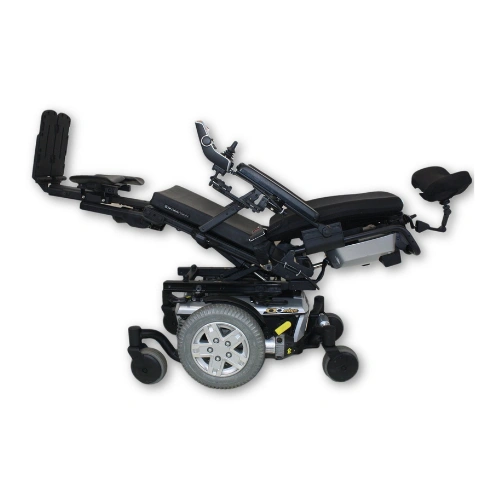
Power Tilt (Tilt-in-Space): The entire seat frame rotates backward. The angle between your torso and your legs stays the same (usually 90 degrees).
- Best For: Pressure relief without the danger of sliding out of the chair or losing your posture.
Power Recline: Only the backrest moves backward, opening the hip angle.
- Best For: Catheterization, stretching the hip flexors, or transferring from the chair to a bed.
Key Clinical Benefits
- Effective Weight Redistribution: Utilizing tilt-in-space technology (ideally tilting back 45 degrees) shifts pressure away from the “sit bones” (ischial tuberosities) and moves it to the larger surface area of the back.
- Edema Management: Elevating the legs while in a tilted position places the feet above the heart. This helps gravity pull fluid out of the legs, reducing swelling (edema) and improving circulation.
- Shear Reduction: Using tilt before you recline helps prevent “shear” forces—the friction that happens when your skin drags against the cushion, which is a leading cause of skin tears.
Qualifying for Power Seating Through Insurance
Because these features are advanced, Medicare requires a specialized evaluation. You will typically need an assessment by a Physical Therapist (PT) or Occupational Therapist (OT) alongside an Assistive Technology Professional (ATP). They will document the clinical need for these power wheelchair options to ensure you receive the correct equipment.
Find the Right Power Chair for You Want to see if you qualify for a power wheelchair with tilt and recline through your insurance? Reach out today to speak with one of our mobility specialists.
Want to see if you qualify for a power wheelchair with tilt and recline through your insurance? You can explore the various power wheelchairs models available to find a base that supports these advanced seating systems. Reach out today to speak with one of our mobility specialists for a free coverage consultation
FAQ: Power Tilt and Recline
Q1: How often should I use my tilt and recline functions?
A: For effective pressure relief, clinical guidelines often recommend tilting back at least 30 to 45 degrees every 15 to 30 minutes, holding the position for at least three minutes to allow blood flow to return to compressed tissues.
Q2: Does Medicare cover power tilt and recline systems?
A: Yes, Medicare Part B generally covers these features as “Complex Rehab Technology” (CRT) when deemed medically necessary. You must have a diagnosis at high risk for skin breakdown (like a spinal cord injury, ALS, or MS) and be unable to perform a weight shift manually.
Q3: What is the benefit of tilting instead of just reclining?
A: Tilting (Tilt-in-Space) allows you to move your center of gravity without changing your hip angle. This provides massive pressure relief without the risk of you sliding forward or losing your posture, which can happen if you only use the recline function.
Q4: Can power seating help with leg swelling?
A: Yes. By using the tilt function in combination with elevating leg rests, you can position your feet above the level of your heart. This uses gravity to help reduce edema (swelling) and improve overall circulation.